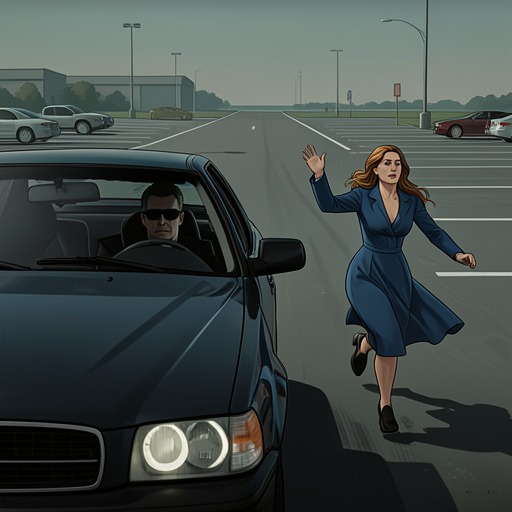
An injured policeman produces heat. A dead policeman raises the temperature tenfold.
Just One Look“An injured policeman produces heat. A dead policeman raises the temperature tenfold.” is Eric Wu’s calculation of the risks of violence, distinguishing an officer he can disable from one whose death would provoke a far more intense response. The line turns his restraint into a tactical rule: it does not prevent him from attacking a police officer, but it sets a limit on how far he is willing to go in that encounter.
Meaning and Use
The expression appears when Wu faces Officer Richardson at Freddy Sykes’s home. Wu lets Richardson approach the open doorway, then attacks him. The narration makes Wu’s objective explicit: he wants to disable the officer, not kill him. The maxim immediately explains the practical logic behind that distinction. An injured officer is already a serious complication; a dead one, in Wu’s estimate, would multiply the pressure brought to bear on him.
The phrase’s blunt arithmetic gives the rule its force. “Heat” stands for the increased attention and consequences that would follow a police officer’s death, while “tenfold” makes the difference sound like a calculation rather than a moral dilemma. Wu’s constraint is therefore tactical, not humanitarian: he uses violence, but tries to control the level of escalation it produces.
Connection to the Missing-Person Investigation
Elsewhere, Grace Lawson encounters another form of institutional pressure and limitation when she asks the police to enter her missing adult husband into the system. Daley explains that updated regulations require a missing person to meet specified criteria. When Grace’s husband does not qualify under the categories discussed, Daley says there is no evidence of foul play and that the investigation would be upgraded if such evidence emerged. Captain Perlmutter later reiterates that the department does not consider foul play established.
Set beside Wu’s maxim, these scenes present “heat” from opposing positions. Wu anticipates the attention his violence could attract and tries to keep it from rising; Grace confronts a system that does not yet consider her husband’s disappearance grounds for that heightened response. The parallel is not that the police treat these situations alike, but that the story makes escalation consequential: both Wu’s choices and the department’s thresholds shape what happens next.
Narrative Function
The expression gives a compact rationale for the limit Wu observes during his assault on Richardson. He does not spare the officer from violence; he stops short of killing him because, in his own calculation, death would dramatically increase the danger and scrutiny facing him. That gap between restraint and brutality is central to the line’s meaning. Its memorable formulation makes Wu’s risk management legible without making it an act of mercy.